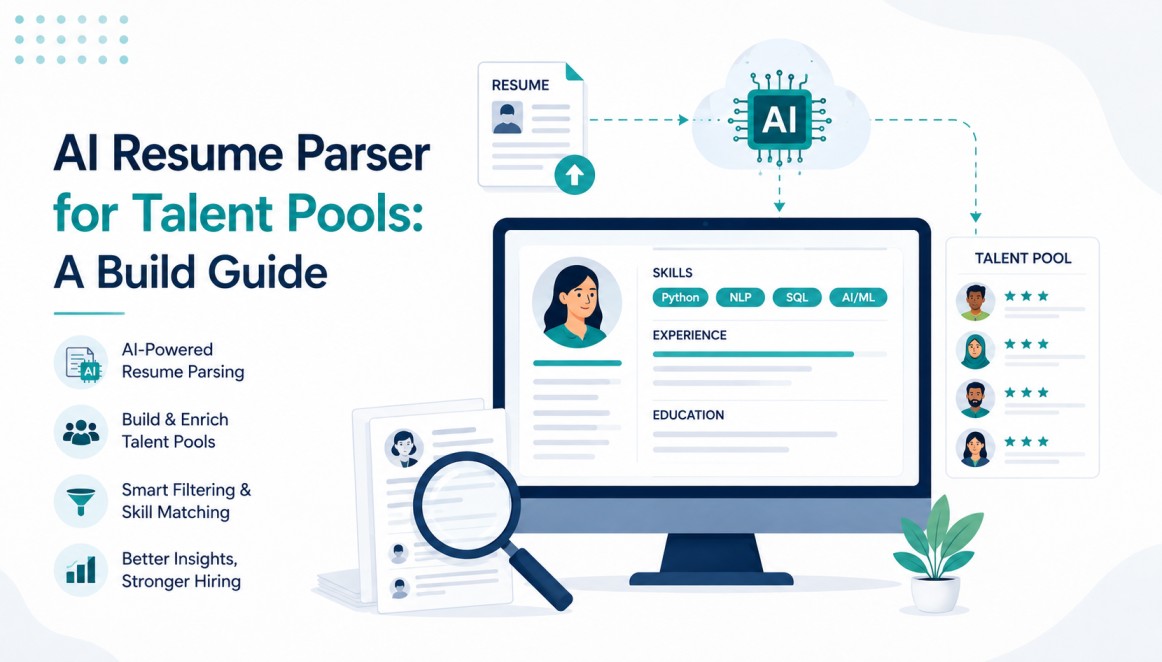
AI Resume Parser for Talent Pools: A Build Guide
Roughly 88% of resumes submitted to a typical job opening are never looked at again once the role closes. They sit in an inbox, a shared drive, or a dead ATS record data that cost time and money to collect- discarded the moment a requisition is filled. For a company hiring the same three roles every quarter, that’s not a filing problem. It’s a compounding cost.
Most startups and SMBs treat every open role as a fresh search. Sourcing starts from zero, screening starts from zero, and the 40 qualified candidates from last quarter’s search the ones who made it to round two but lost to one stronger finalist disappear. An AI resume parser for talent pools changes that math by turning every past application into structured, searchable data that a team can query the next time a similar role opens.
This isn’t a call to hold resumes indefinitely. It’s a case for structured retention: parsing, tagging, and organizing candidate data so it’s usable six months later, not just searchable by filename.
The rest of this guide covers how parsing technology enables that, what tagging strategy actually works, and how to set up re-engagement triggers that don’t feel like spam to the candidates on the other end.
What Is an AI Resume Parser for Talent Pools?
An AI resume parser for talent pools is software that extracts structured data skills, job titles, tenure, location, certifications from unstructured resumes and stores it in a searchable candidate database, allowing recruiters to query past applicants for future roles instead of re-sourcing from scratch. It converts a static PDF into a queryable record.
The distinction that matters: a resume parser reads a document once. A talent pool system keeps that parsed data alive, tagged and indexed, so it’s still useful the next time a matching role opens.
The Core Problem Most Teams Underestimate
Here’s the number that gets missed: a company hiring 15-20 roles a year across recurring functions (sales, support, ops) will typically generate 800-1,200 applications annually.
Fewer than 5% convert to a hire. The other 95% either had no chance from the start, or were genuinely strong candidates who lost to a slightly better fit at the time.
Most teams underestimate how much of that 95% is recoverable by 3-4x. They assume a “no” from six months ago means a permanent no.
In practice, a candidate rejected for a mid-level sales role in Q1 because the team needed someone with SaaS experience specifically might be an excellent fit for a general B2B sales opening in Q3, but only if someone can find them.
The retrieval problem is structural, not motivational. Recruiters aren’t lazy about revisiting old candidates; they simply have no fast way to search unstructured resume data sitting across email threads, shared drives, and ATS exports.
A recruiter manually re-reading 200 old resumes to find three good fits for a new role burns 6-8 hours most SMB hiring teams don’t have when a requisition needs to close in 21-30 days.
There’s also a compliance dimension. Candidate data retention without consent, or beyond a jurisdiction’s data-protection window, creates legal exposure, not just an inefficiency.
Any talent pool strategy has to answer “how long are we allowed to keep this, and did the candidate agree to it” before it answers “how do we search it faster.”
How Parsed Data Enables Searchable Talent Pools
This is where the mechanics matter. Raw resumes are unstructured text; no two are formatted the same way, so keyword search against a folder of PDFs returns unreliable results.
Resume parsing technology solves this by extracting the same fields from every resume: job titles, employers, tenure, skills, education, location, certifications into a consistent schema.
Once that data is structured, it becomes queryable the way a spreadsheet is queryable. A recruiter can filter for “3+ years account management, based in Bangalore, applied in the last 12 months” and get a ranked list in seconds instead of a manual re-read.
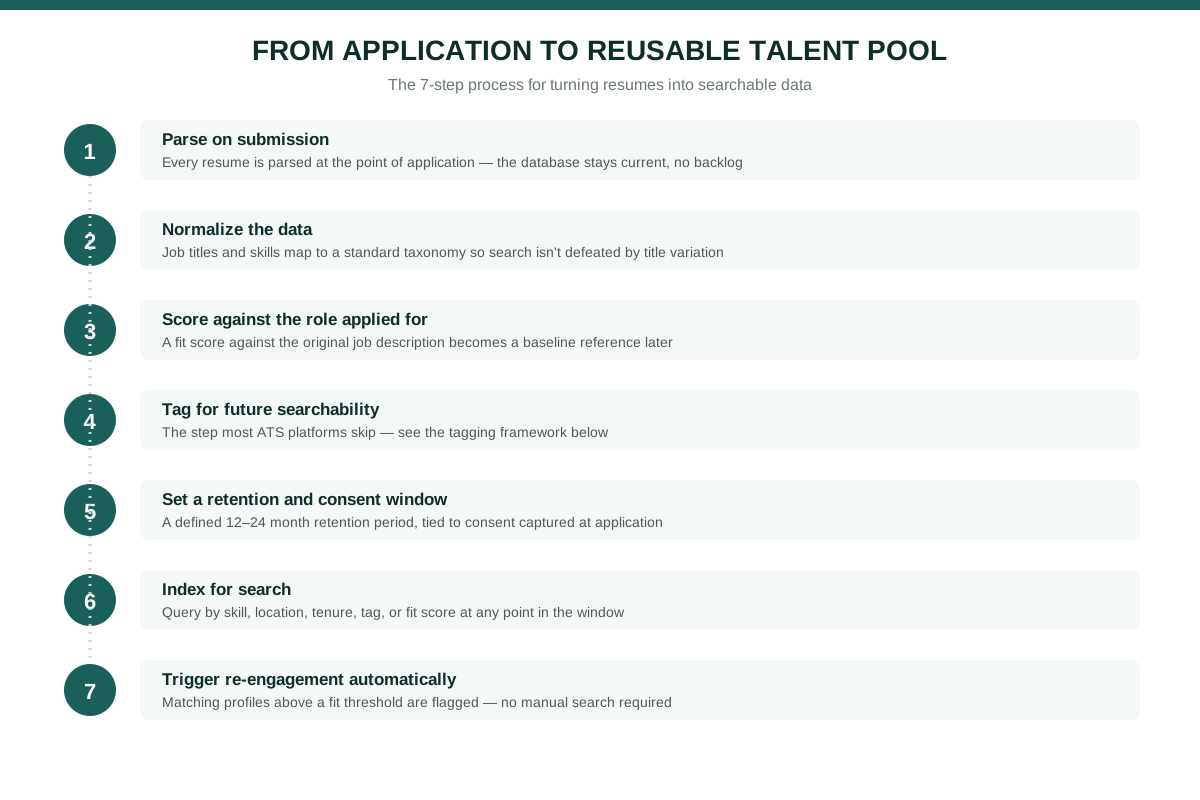
The Process: From Application to Reusable Talent Pool
- Parse on submission. Every incoming resume is parsed at the point of application, not batch-processed later. This keeps the candidate database current without a backlog.
- Normalize the data. Job titles and skills get mapped to a standard taxonomy (e.g., “Sales Development Rep,” “SDR,” and “Business Development Associate” all map to one category) so search isn’t defeated by title variation.
- Score against the role applied for. AI candidate insights typically include a fit score against the original job description, which becomes a baseline reference even after the role closes.
- Tag for future searchability. This is the step most ATS platforms skip; see the tagging section below.
- Set a retention and consent window. Candidate data should carry an explicit retention period (commonly 12-24 months) tied to the consent captured at application.
- Index for search. Structured, tagged data gets indexed so recruiters can query by skill, location, tenure, tag, or fit score at any point during the retention window.
- Trigger re-engagement automatically. When a new requisition matches stored candidate profiles above a set fit threshold, the system flags them instead of requiring a manual search.
Tagging Strategy for “Not Now, But Later” Candidates
Tagging is the difference between a talent pool and a resume archive. Generic tags like “rejected” or “not selected” are functionally useless six months later; they tell a recruiter nothing about why or for what.
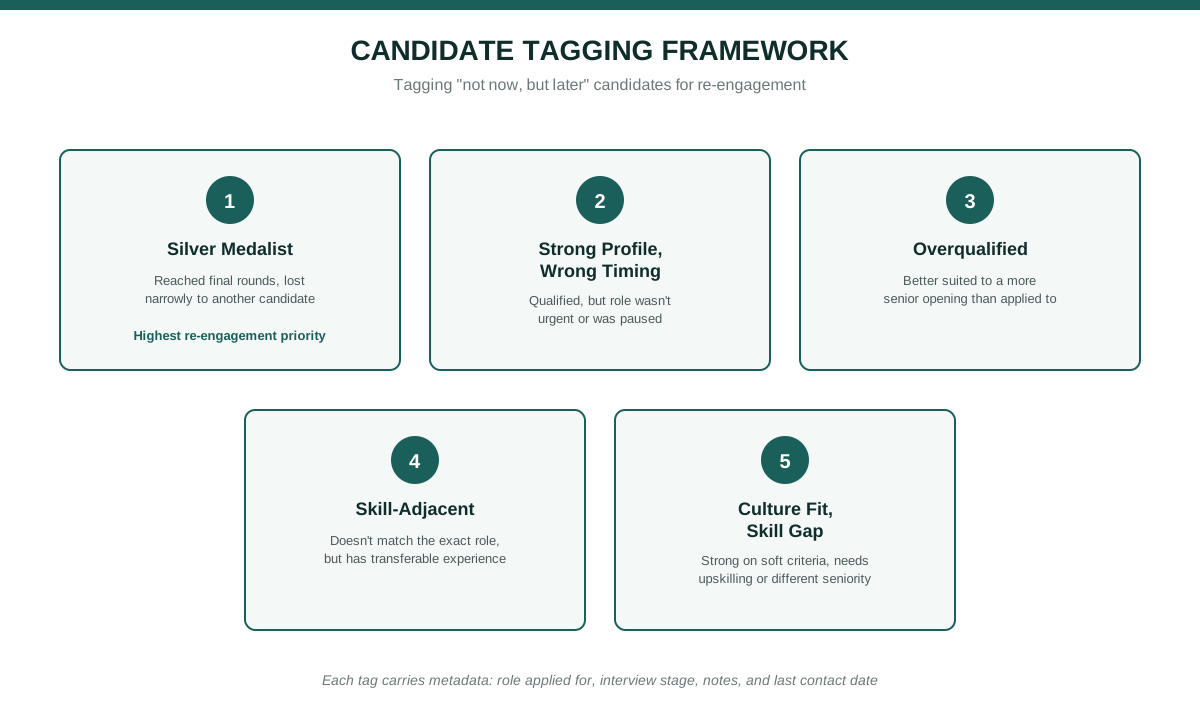
A workable tagging structure separates candidates into functional categories:
- Silver medalist: reached final rounds, lost narrowly to another candidate. Highest re-engagement priority.
- Strong profile, wrong timing: qualified but applied when the role wasn’t urgent, or the position was paused.
- Overqualified for role applied to; better suited to a more senior opening than the one they applied for.
- Skill-adjacent doesn’t match the exact role but has transferable experience for a related function.
- Culture/values fit, skill gap: assessed well on soft criteria but needs upskilling or a different seniority level.
Each tag should carry metadata: which role the candidate applied for, the interview stage reached, interviewer notes, and the date of last contact. This is what makes candidate database management functional rather than cosmetic; tags without context degrade into noise within two hiring cycles.
Re-Engagement Triggers That Don’t Feel Like Spam
Re-engagement fails when it’s generic: a mass email six months later asking “still interested?” reads as an afterthought and damages employer brand more than it helps. Effective triggers are role-specific and timed to actual openings:
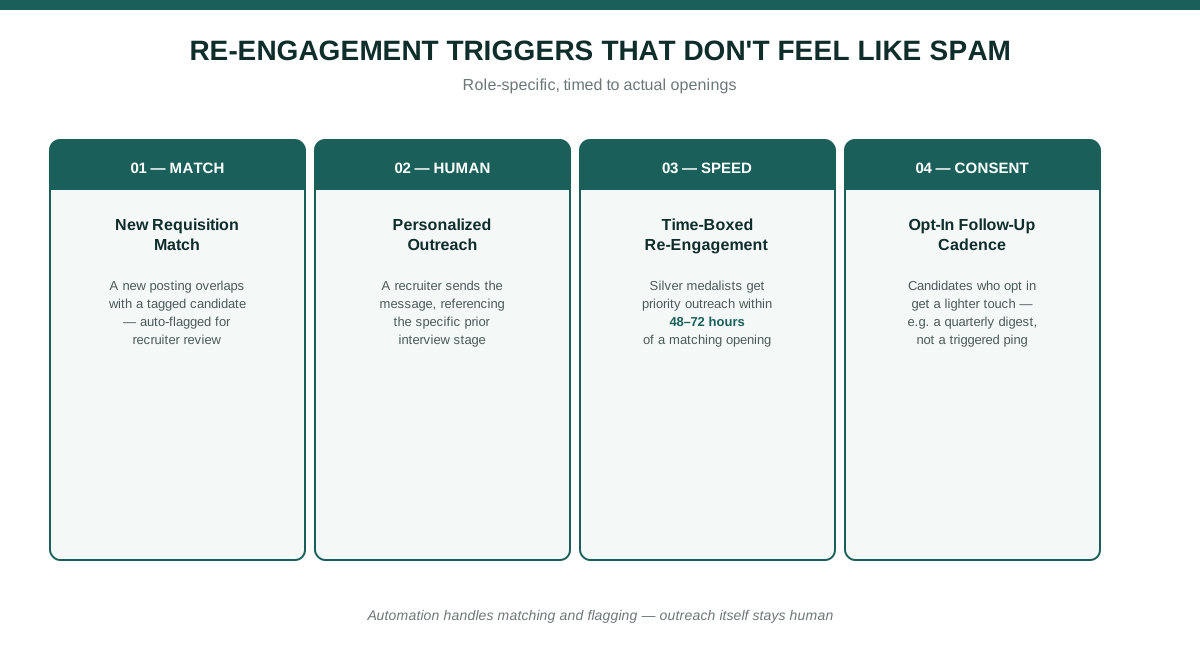
- New requisition match: When a new job is posted through job posting software and its requirements overlap significantly with a tagged candidate’s profile, that candidate is auto-flagged for recruiter review ot auto-contacted.
- Recruiter-initiated, personalized outreach: The system surfaces the match; a human sends the message, referencing the specific prior interview stage (“We spoke back in March about the Account Executive role…”).
- Time-boxed re-engagement: Silver medalist candidates get priority outreach within the first 48-72 hours of a matching role opening, before external sourcing begins; this is where the speed advantage compounds.
- Consent-based follow-up cadence: Candidates who opt into “future opportunities” communication get a lighter, less frequent touch (e.g., quarterly digest) rather than a triggered message every time a loosely related role opens.
- Workflow automation software handles the matching and flagging step; the outreach itself stays human for anything past the initial “we have a role that might interest you” message. Fully automated re-engagement at the outreach stage tends to read as impersonal and lowers response rates.
Example: Building a Pool for a Recurring Seasonal Role
A mid-size D2C retailer hiring 40-60 seasonal sales associates every Q4 illustrates this well. Sourcing from scratch each October meant a 5-6 week ramp-up: job postings, screening, interviews, offers every year, starting from zero.
Using a talent pool built from the prior three seasonal hiring cycles, the same company tagged every applicant who reached interview stage but wasn’t selected, along with returning seasonal employees who didn’t reapply the following year but rated well on performance reviews.
When the Q4 requisition opened, around 35% of the seasonal roles were filled from the existing pool within the first 10 days before external job postings had generated meaningful applicant volume.
The remaining roles still required fresh sourcing, but the pool absorbed the initial ramp-up pressure that used to consume the first two weeks of the cycle.
Case Studies
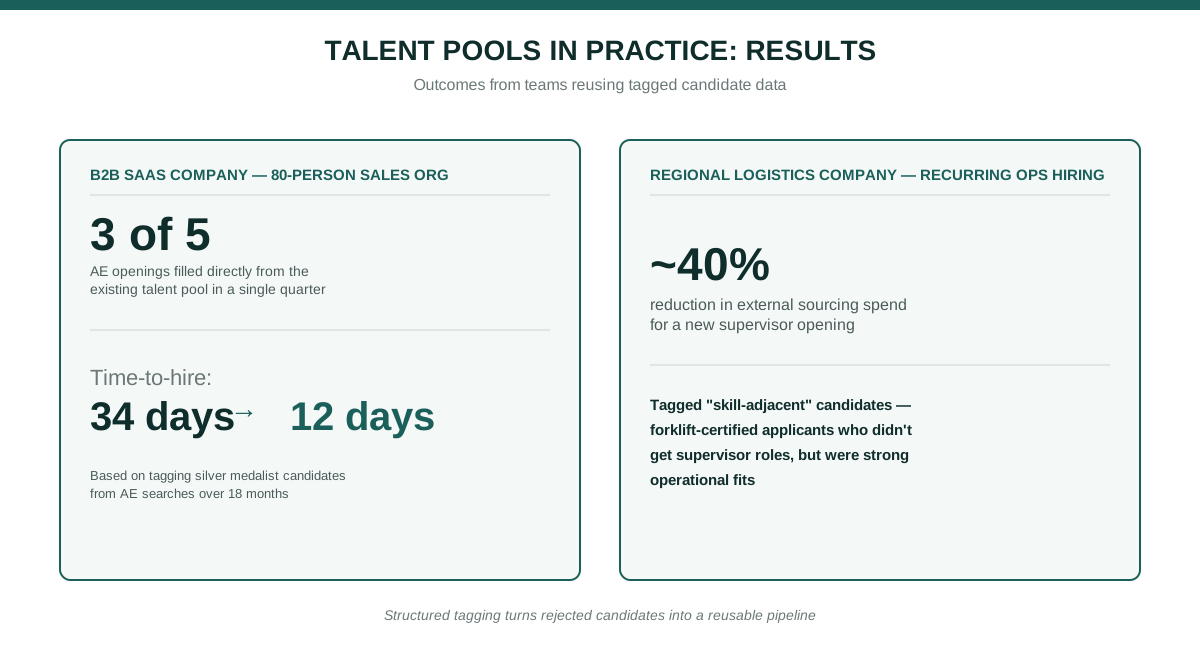
B2B SaaS company, 80-person sales org: After tagging silver medalist candidates from account executive searches over 18 months, the talent acquisition team filled 3 of 5 AE openings in a single quarter directly from the existing pool, cutting average time-to-hire for those roles from 34 days to 12 days.
Regional logistics company, recurring ops hiring: A logistics operator hiring warehouse supervisors on a rolling basis implemented tagging for “skill-adjacent” candidate- worklift-certified applicants who didn’t get supervisor roles but were strong operational fits.
Re-engaging that segment for a new supervisor opening reduced external sourcing spend by roughly 40% for that hiring cycle.
Comparison: Talent Pool Approaches
| Approach | Search Speed | Data Freshness | Setup Effort |
| Manual resume folders (email/drive) | Slow manual review | Degrades quickly | None, but unsustainable at scale |
| Spreadsheet tracker | Moderate keyword search only | Requires manual updates | Low, breaks down past ~200 candidates |
| Basic ATS with resume storage | Faster but rarely structured or tagged | Depends on manual tagging discipline | Moderate |
| AI resume parser with structured tagging | Fast field-level, filterable search | Stays current automatically at point of application | Moderate upfront, low ongoing |
The gap between a basic ATS and one built around parsing and tagging isn’t storage; most platforms store resumes fine. It’s whether that stored data is queryable by anything more specific than a filename.
What Most Teams Get Wrong
The most common mistake isn’t failing to build a talent pool; it’s building one and never revisiting the tagging logic.
Teams tag candidates once, at rejection, and never update that record when circumstances change: a role’s requirements shift, a candidate’s skills grow, or a “wrong timing” candidate becomes urgent six months later.
The second mistake is treating talent pools as a sourcing shortcut rather than a relationship. Candidates who reach final interview rounds and get rejected remember the process.
Reaching back out with a generic mass email erodes the goodwill that made re-engagement possible in the first place. The pool has value only if the follow-up feels considered.
The third mistake is indefinite retention without consent review. Holding candidate data past a reasonable window, or without a clear opt-in for future contact, is a compliance liability that outweighs the sourcing convenience, particularly for companies operating under GDPR-adjacent or India’s DPDP-aligned data rules.
FAQ
How do you build a candidate talent pool from past applicants?
Start by parsing every applicant’s resume into structured data at the point of application, then tag candidates by outcome (silver medalist, wrong timing, skill-adjacent) rather than a simple accept/reject status. Set a retention window tied to candidate consent, and index the data so it’s searchable when a new role opens.
What is candidate tagging in recruitment?
Candidate tagging is the practice of labeling applicants with functional categories beyond hired/rejected, such as final-round finalist, overqualified, or culture-fit-but-skill-gap, along with the role and interview stage reached. It’s what makes a stored resume searchable and useful months after the original role closes.
How do you re-engage silver medalist candidates? Silver medalist candidates should be flagged automatically when a new, matching role opens, then contacted personally by a recruiter who references the specific prior process. Outreach works best within the first 48-72 hours of a new requisition, before external sourcing generates a fresh applicant pool.
How accurate is AI resume parsing?
Parsing accuracy depends heavily on resume formatting and the parser’s training data, but modern parsers built for standard resume layouts typically achieve high accuracy on core fields like job titles, employers, and dates. Accuracy drops on heavily designed or non-standard resume formats, so a manual review step for edge cases is still worth keeping.
How long should companies retain candidate data in a talent pool?
Retention periods commonly range from 12 to 24 months, but the right window depends on applicable data-protection law and the consent captured at the time of application. Retention should always be paired with an opt-in for future contact, not assumed by default.
Is a talent pool worth building for a small hiring volume?
Talent pools show the clearest return for companies hiring the same 3-5 role types repeatedly, such as recurring seasonal, sales, or support positions. If hiring volume is low and roles are rarely repeated, the setup effort may outweigh the benefit; a lighter tagging system without full automation may be more appropriate.
Where This Fits Into a Broader Hiring Workflow
Building a searchable talent pool isn’t a standalone project; it works best as one piece of a connected hiring workflow, where parsing, tagging, job posting, and candidate communication run through the same system rather than across disconnected tools. Platforms like Hirium are built around this idea: centralized candidate data, AI-driven fit scoring, and automated workflows that flag matching past candidates when a new role opens, without requiring a manual re-search each time.
If your team is evaluating how to structure a talent pool before committing to a specific vendor or process, it’s worth pressure-testing the tagging and retention logic first that’s the part that determines whether the pool is still useful a year from now.