Skills-Based Hiring: How to Find the Right Talent
Most recruiters still open a resume and check for a degree first, then look for a skill match second. That habit is losing ground fast.
According to NACE’s Job Outlook 2026 survey, 70 percent of employers now report using skills-based hiring, up from 65 percent the year before, and most say they apply it at least half the time. The shift is not a trend piece anymore; it is a real change in how companies decide who gets hired.
Resumes filter out people who can do the job but never got the degree or title that would make it past a keyword scan. Skills-based hiring flips that filter. It asks candidates to prove what they can actually do, not what school they went to.
This guide breaks down what skills-based hiring means, why it works, and how to build the process step by step.
What Is Skills-Based Hiring?
Skills-based hiring means evaluating candidates on what they can actually do, not on their degree, job title, or years of experience. Recruiters use tests, work samples, and structured questions to measure real ability instead of guessing from a resume.
-
How It Differs From Resume-First Screening
Resume-first screening ranks candidates by credentials: college name, past titles, years worked. It rewards people who look qualified on paper.
Skills-based hiring reverses the order. Candidates first prove specific abilities through assessments or tasks, then the resume adds context. The skill becomes the filter, not the formality.
-
Why Skills-Based Hiring Is Gaining Ground in 2026
Job requirements change quickly, particularly in roles influenced by technology and new tools. A job title or degree can provide useful context, but it does not always show the full range of skills a candidate has developed.
This is one reason employers are paying more attention to skills assessments, work samples, and competency-based evaluation.
In that manner, skills-based hiring works best when the skills being assessed are clearly connected to the actual responsibilities of the role. Removing a degree requirement alone does not create a skills-based hiring process.
How to Build a Skills-Based Hiring Process, Step by Step
Knowing why skills-based hiring works is one thing. Building a process around it is another. Here is a step-by-step way to move from resume screening to a hiring process that actually tests for ability at every stage.
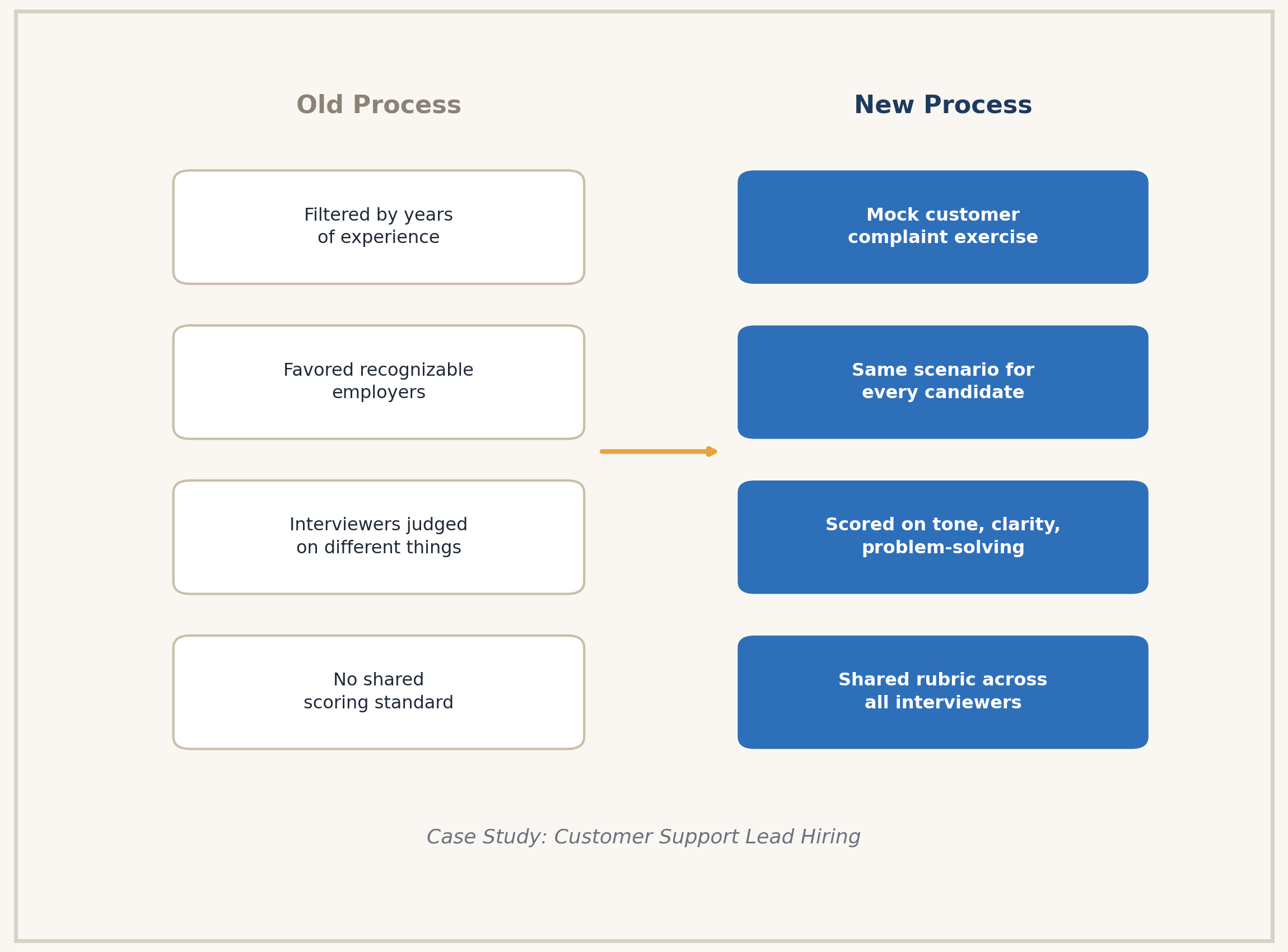
Step 1: Identify the Core Skills for the Role
Before writing a job post, sit down with the hiring manager and list the skills someone actually needs on day one.
Separate the requirements into:
- Must-have skills
- Role-specific technical skills
- Transferable skills
- Nice-to-have skills
Skip vague terms like “team player” and get specific: SQL query writing, client negotiation, Python debugging.
The skills list should become the foundation for the rest of the hiring process.
Step 2: Write Job Descriptions Around Skills
Review every credential requirement before adding it to the job description.
If a degree is legally required or genuinely necessary for the role, keep it. Otherwise, consider whether the requirement is actually measuring job capability.
Instead of relying heavily on statements such as “5+ years of experience,” explain what the candidate will need to do.
For example:
Instead of:
“5+ years of marketing experience.”
Consider:
“Experience planning SEO campaigns, analyzing organic traffic, and turning search data into content opportunities.”
The second version gives candidates a clearer picture of the work and gives recruiters a more useful skill signal to evaluate.
Step 3: Screen Applications for Skill Signals
Look past job titles and college names. Read for evidence: projects the candidate built, problems they solved, tools they used regularly. A candidate who ran a small business’s entire hiring process for two years may be a stronger fit for a coordinator role than someone with a fancier title who never touched the actual work.
Step 4: Assess Skills Before the First Interview
Give candidates a task that mirrors real work. A writing role gets a short writing sample. A sales role gets a mock pitch. Keep it short enough to respect their time, usually under an hour.
This step filters out people who look good on paper but cannot deliver, before anyone spends time on a call.
Step 5: Score Candidates Against the Same Criteria
Every candidate gets judged against the same rubric, built from the skills list in step one. This stops interviewers from favoring candidates who simply interview well or share their background.
A consistent scorecard also protects you if a hiring decision ever gets questioned later, since the reasoning is documented and repeatable.
Step 6: Validate Skills Against Job Performance
The hiring process should not end when the candidate accepts the offer.
After three or six months, compare the skills assessed during hiring with actual job performance by asking :
- Which assessment results matched later performance?
- Which skills were overvalued?
- Were important skills missed?
- Did the assessment reflect the real work?
- Should the scorecard change for future hiring?
Skills-Based Hiring vs Traditional Hiring
The two approaches lead to different outcomes at almost every stage of hiring. Here is how they compare side by side.
| What’s Evaluated | Skills-Based Hiring | Traditional Hiring |
| Primary Criteria | Real ability, tested through assessments, work samples, or task-based exercises | Degrees, job titles, years of experience, and resume keywords |
| Time-to-Hire Impact | Faster decisions once assessments are in place, since scores replace long rounds of subjective debate | Slower, with multiple interview rounds often needed to settle disagreements between interviewers |
| Bias Risk | Lower, since scoring is based on a shared rubric rather than personal impressions of a resume or school name | Higher, since degree and title filters tend to screen out qualified candidates from non-traditional backgrounds |
| Resume for Talent Pool | Larger, because candidates without a degree or a matching job title are not automatically excluded | Smaller, since resume filters cut out anyone who does not match the expected credentials |
| Predictive Validity | Stronger, since it tests the exact ability the role requires instead of assuming a resume line proves competence | Weaker, since a degree or past title does not reliably predict how someone performs in a new role |
Skills-Based Hiring in Practice
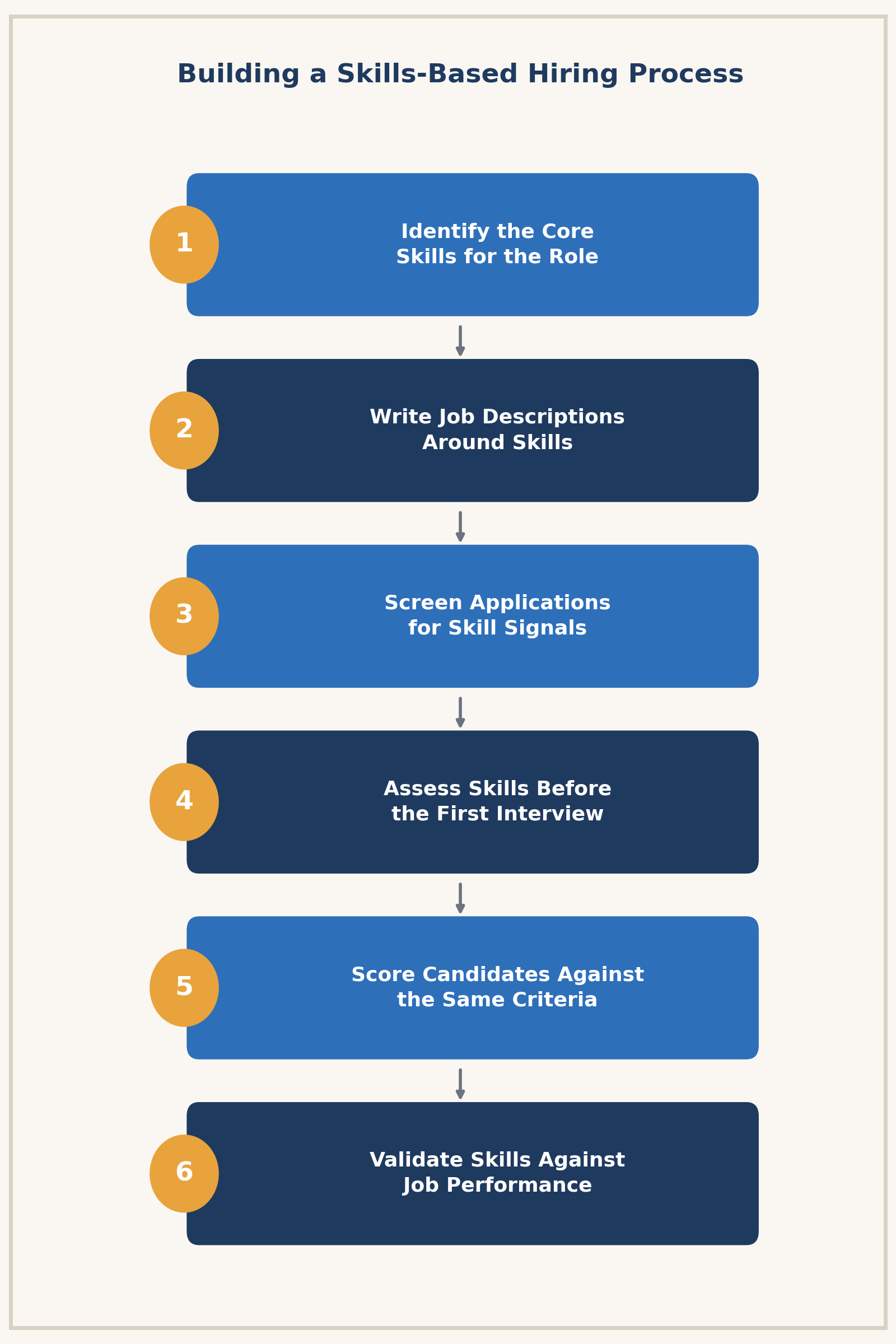
Consider a startup hiring for a customer support lead.
Previously, the team screened candidates based mainly on years of experience and recognizable employers. Interviews then produced different opinions because each interviewer focused on different qualities.
The team changed the process by introducing a short written customer-support exercise.
Every candidate received the same scenario: respond to a difficult customer complaint.
The responses were evaluated using the same criteria:
- Tone
- Clarity
- Problem-solving
- Understanding of the customer’s concern
The interview then focused on areas that needed further discussion.
This approach gave the hiring team something concrete to evaluate before making a decision. It also created a useful record for future hiring. If new hires consistently performed well or struggled in a particular area, the team could review whether its original assessment was testing the right skills.
This is the key difference: the process creates evidence that can be reviewed and improved instead of relying entirely on interview impressions.
Where AI and ATS Technology Fit Into Skills-Based Hiring
Skills-based hiring sounds great on paper, but doing it by hand for every applicant takes real time, and most recruiters don’t have that time to spare. This is where the right technology changes what’s actually possible.
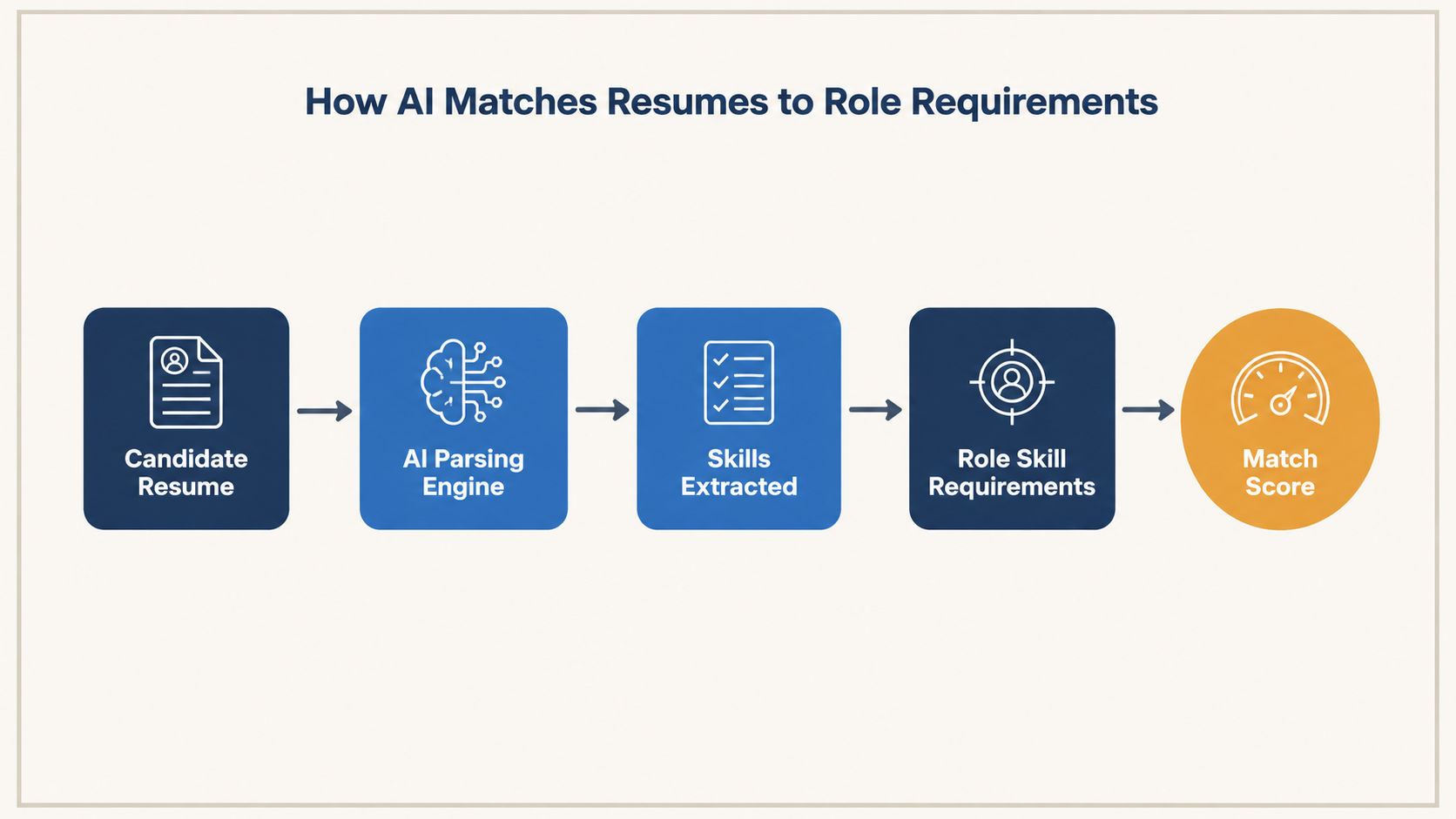
1. Resume Parsing for Skills, Not Just Keywords
Older resume scanners only match exact words. If a candidate wrote “led a small team” instead of “management,” the system missed them entirely, even though they had the skill you needed. Modern AI resume parsing reads resumes closer to how a person would. It picks up on projects, responsibilities, and context, not just isolated words sitting on a page. A candidate who built and ran a support process for three years gets recognized for that experience, even if their resume never used the word “leadership” once.
2. Matching Candidates to Roles by Skill Overlap
Once a system understands what a candidate can actually do, it can compare that against what a role genuinely requires, instead of just checking whether job titles line up.
This matters because two people with the same title can have completely different skill sets. An AI-powered ATS looks at the overlap between what a candidate has demonstrated and what the role calls for, then surfaces the closest matches first.
Recruiters spend their time on candidates worth a real conversation, instead of sorting through a pile that was never ranked by anything meaningful.
3. Removing Manual Bottlenecks From Skills Screening
Sending assessments, tracking who finished them, chasing candidates who forgot to submit, scoring dozens of responses by hand- none of this scales when a role gets more than a handful of applicants.
Automation handles the repetitive parts: sending the test, flagging completed submissions, and organizing scores next to each candidate’s profile so nothing gets lost in a spreadsheet.
The recruiter’s job shifts from chasing logistics to reviewing results and making a decision, which is where their judgment actually adds value.
How to Balance Skills Data With Human Judgment
The strongest process combines multiple sources of evidence.
A recruiter might consider:
Resume → Skills assessment → Structured interview → References → Final evaluation
Each stage answers a different question.
The assessment shows what the candidate can do. The interview adds context. References can provide another perspective on previous performance.
No single signal needs to carry the entire hiring decision.
Hire for Skills, Not Just Resumes, With Hirium
Skills-based hiring works, but only if the process behind it is built to support it. Testing candidates on real ability instead of resume lines is the right idea, and the teams that follow through on it consistently make better hires, faster, with less bias creeping into the decision.
Hirium is built for exactly this shift. Its AI reads resumes for real experience and context, not just keywords, so candidates with the right skills don’t get filtered out over a missing degree or an unfamiliar job title.
The platform matches applicants to roles based on skill overlap, ranks the strongest fits first, and handles the repetitive parts of screening automatically, so recruiters spend their time reviewing real signal instead of chasing logistics.
Candidates benefit just as much; they get evaluated on what they can actually do, not on which school they attended or how polished their resume reads.
That means a fair shot for people who never fit the traditional mold but can absolutely do the job.
Skills got you here. The right tools make sure they get noticed.
Frequently Asked Questions
1. Does skills-based hiring mean resumes don’t matter at all?
No. Resumes still give context, like career history and past projects. What changes is the order. Candidates prove their skills first through assessments or tasks, and the resume fills in the background after, instead of acting as the first filter.
2. How do you test for soft skills like communication or teamwork?
Use situational exercises instead of generic questions. A written response to a mock customer complaint, a role-play negotiation, or a group task during the interview process shows how someone actually communicates or handles conflict, which tells you more than asking them to describe their soft skills in a sentence.
3. Is skills-based hiring realistic for high-volume roles?
Yes, especially with the right tools. Manually reviewing skill assessments for hundreds of applicants isn’t practical, but automated screening and AI-powered matching handle that volume without slowing down the process, so high-volume roles don’t have to fall back on resume filters out of convenience.
4. Does skills-based hiring actually reduce bias in hiring decisions?
It reduces bias when it’s built around a shared scoring rubric. Judging every candidate against the same criteria removes a lot of the subjective, gut-feeling decisions that let unconscious bias creep in through resumes, names, or school pedigree.