How AI-powered Candidate Matching Saves Hiring Time?
Hiring teams spend hours each week sorting through resumes that never should have reached their inbox in the first place. A single job posting for a mid-level role can pull in hundreds of applications, and most recruiters still open each one manually to check for basic qualifications.
That process eats into time that could go toward interviewing strong candidates or closing offers faster. Smart Recruiters’ 2026 Global Recruitment Benchmarks found that companies using AI can hire candidates 11 days faster than those following traditional hiring processes
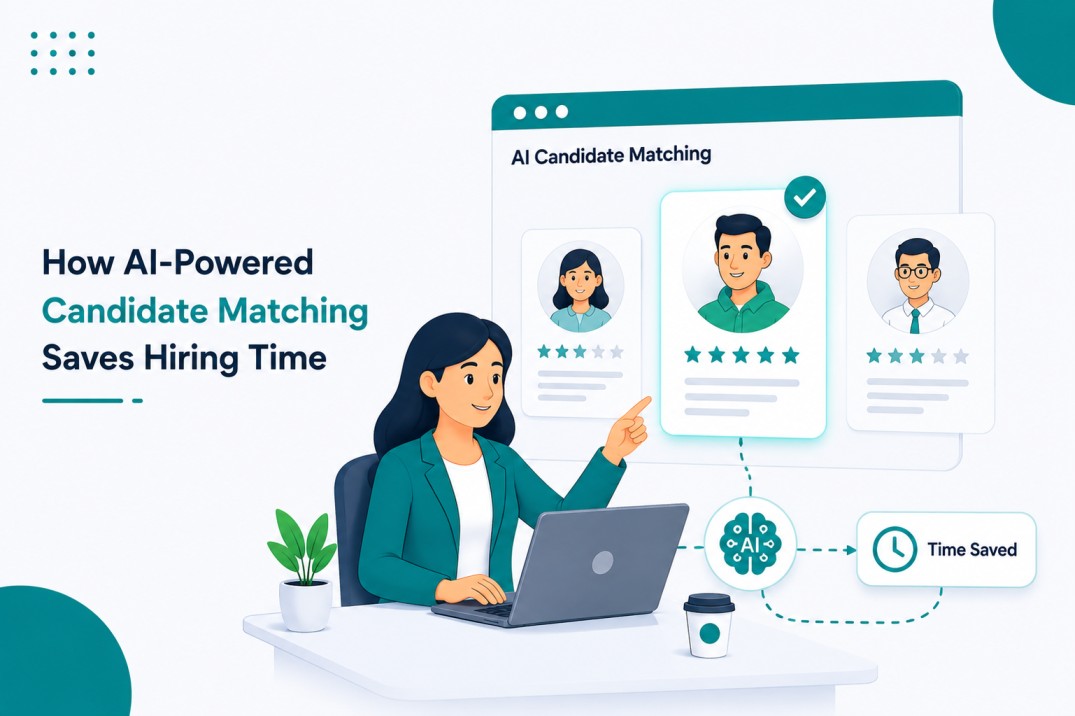
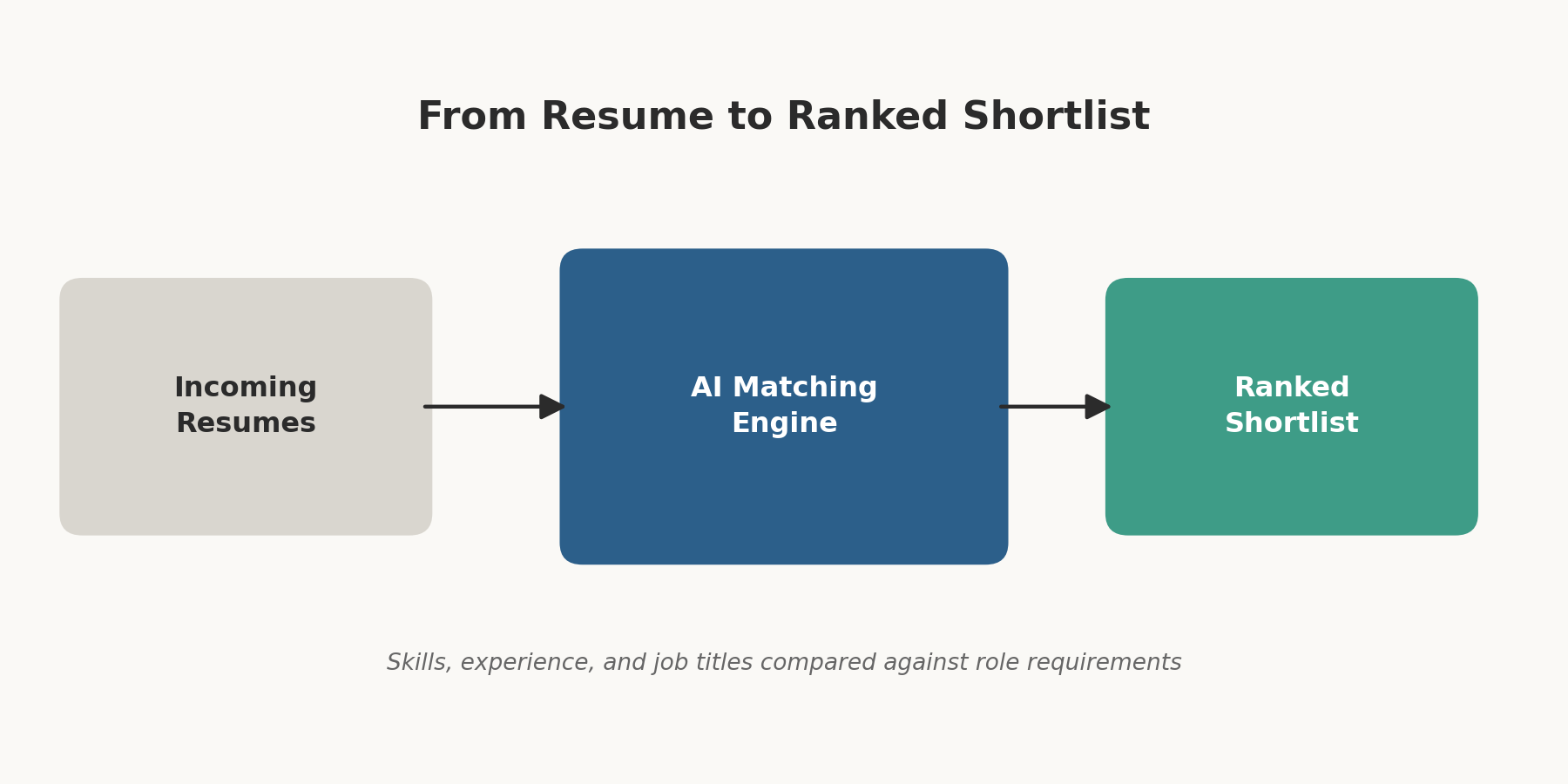
AI-powered candidate matching software changes this equation. Instead of a person reading every resume line by line, an algorithm compares each application against the job requirements and ranks candidates by fit. The result is a more accurate shortlist, built in minutes instead of days.
This post covers how candidate matching works, why it saves so much time compared to manual screening, and what to check for before choosing a matching tool for your hiring process.
What Is AI-Powered Candidate Matching
Candidate matching is a feature inside modern applicant tracking systems that scores and ranks applicants against a job description. It reads resumes, pulls out skills, experience, education, and job titles, then compares that data against the requirements set for the open role.
The output is a ranked list, often with a percentage match score next to each name. A recruiter can sort candidates from highest match to lowest and start reviewing from the top instead of scrolling through an unsorted pile.
How It Differs From Basic Keyword Filters
Older applicant tracking systems relied on simple keyword search. If a resume didn’t contain the exact phrase “project management,” it got filtered out, even if the candidate had years of relevant experience described in different words.
Matching tools built on natural language processing read resumes for meaning rather than exact phrasing. A candidate who wrote “coordinated cross-functional teams to deliver product launches” can still match a job asking for “project management experience,” because the system recognizes the underlying skill instead of hunting for one exact string of text.
Why Manual Screening Takes So Long
Before getting into the time savings, it helps to understand where the hours actually go during manual screening.
- Reading every resume individually, even ones that are obviously a poor fit
- Cross-checking candidate experience against job requirements by hand
- Re-reading resumes multiple times to compare finalists
- Manually tagging or labeling candidates for follow-up
- Repeating this entire process for every open role, every week
A hiring manager reviewing 200 applications for one role might spend eight to ten hours just getting through the initial read.
Multiply that across five or six open roles running in parallel, and screening alone can consume most of a recruiter’s week before a single interview gets scheduled.
How Candidate Matching Cuts That Time Down
1. Automatic Ranking Instead of Manual Sorting
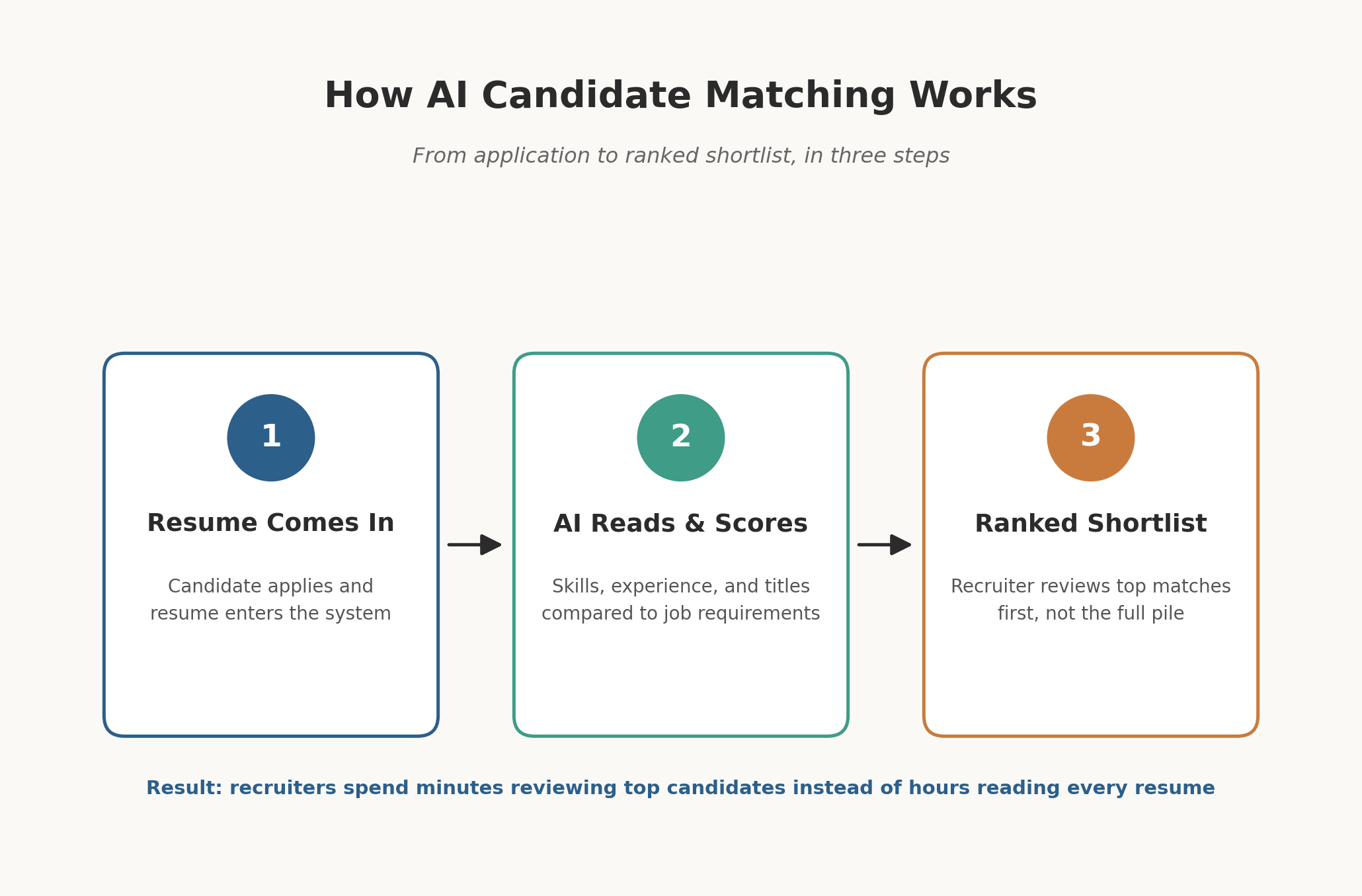
Once matching software processes an application, it assigns a score and places the candidate into a ranked list. Recruiters open the tool and see the strongest matches sitting near the top, already separated from applicants who don’t meet the core requirements.
This alone removes the need to open and read every single resume. A recruiter can review the top twenty or thirty ranked candidates and get a strong shortlist without touching the rest of the pile.
2. Faster Shortlisting for High-Volume Roles
Roles that attract large applicant pools, like customer support, sales development, or entry-level technical positions, benefit the most. A matching tool can process hundreds of applications in the time it takes a person to read through ten.
For startups and small teams hiring across multiple roles in parallel, this speed matters more than it might for a single large enterprise with a dedicated screening team.
Small hiring teams don’t have the headcount to throw more people into the problem, so software doing the first pass frees up the few hours recruiters do have for actual conversations with candidates.
3. Reducing Repeat Work Across Similar Roles
Many companies hire for similar positions repeatedly. A matching system that already understands the requirements for a “Customer Success Manager” role can apply that same logic the next time a similar opening comes up, instead of a recruiter rebuilding screening criteria from scratch every time.
4. Fewer Missed Candidates
Manual screening under time pressure leads to skipped resumes, especially late in the day or near a hiring deadline. A ranking system doesn’t get tired or rush through the last fifty applications.
Every resume gets scored using the same criteria, which lowers the chance of a qualified candidate getting overlooked because a recruiter ran out of time.
Beyond Speed: Other Benefits of Candidate Matching
Time savings get most of the attention, but a few other advantages come along with faster screening.
-
More Consistent Evaluation Criteria
When screening is done manually, different recruiters can apply slightly different standards, even when working from the same job description. Matching software applies the same scoring logic to every candidate, which creates a more consistent baseline for the first round of review.
-
Better Candidate Experience Through Faster Response Times
Candidates who apply and hear nothing for two or three weeks often assume they’ve been rejected or forgotten. Faster screening means recruiters can respond sooner, whether that response is an interview invite or a polite decline. Quicker turnaround reflects well on the company and keeps strong candidates from accepting an offer elsewhere while they wait.
-
Data on Where Strong Candidates Come From
Matching tools that track scores over time can show which job boards, referral sources, or application channels tend to produce higher-matching candidates. That information helps recruiting teams put budget and effort toward the sources actually producing results, instead of guessing.
What to Look For in a Candidate Matching Tool
Not every matching tool works the same way, and picking the wrong one can create new problems instead of solving old ones.
1. Transparency in Scoring
A good tool should show why a candidate received a particular score, not just the number itself. If a system flags a candidate with an 85% match score, a recruiter should be able to see which qualifications drove that score and which ones were missing. Black-box scoring makes it hard to trust or explain decisions to hiring managers.
2. Customizable Matching Criteria
Every role has different priorities. A sales role might weigh past quota performance heavily, while a technical role cares more about specific tools and certifications. Look for software that lets you adjust which factors matter most for each individual job posting, rather than applying one fixed formula to every role.
3. Integration With Existing Hiring Workflow
Matching only saves time if it fits into the tools recruiters already use. A system that requires exporting spreadsheets or manually re-entering candidate data into another platform adds extra steps instead of removing them.
Look for candidate matching features built directly into your applicant tracking system, so ranked candidates flow straight into interview scheduling and status tracking without extra manual work. This can also help reduce employment turnover by making it easier to identify candidates whose skills and experience align with the role.
4. Bias Checks Built Into the Process
Any tool trained on historical hiring data can pick up patterns that reflect past bias rather than actual job performance. Ask vendors how their matching algorithm gets tested for bias and how often those checks happen. This matters both for fairness and for avoiding legal risk tied to discriminatory hiring practices.
Signs Your Team Needs Candidate Matching
Not every hiring team feels the pain of manual screening the same way. A few signs point to a real need for matching software rather than a nice-to-have upgrade.
- Recruiters routinely spend more time screening resumes than talking to candidates
- Open roles stay unfilled longer than the industry average for that position
- Hiring managers complain that unqualified candidates keep reaching the interview stage
- The same small team is responsible for screening across five or more open roles together
- Application volume has grown faster than the hiring team’s headcount
If two or more of these sound familiar, manual screening has likely become the biggest bottleneck in your hiring process, and matching software is worth testing.
Bringing Candidate Matching Into Your Hiring Process
Manual resume screening was never built for the volume of applications hiring teams deal with today. Candidate matching gives recruiters a faster, more consistent starting point, so hours that used to go toward reading resumes can be devoted to actually talking to candidates and closing roles.
Hirium‘s AI-powered candidate matching ranks applicants against your job requirements automatically, so your team can spend less time screening and more time hiring. Request a demo to see how it fits into your current process.
FAQs
1. Does AI-powered candidate matching replace human judgment in hiring?
No. Matching software handles the first pass of screening, narrowing a large pool down to a shorter list of strong candidates. Final decisions on interviews and offers still rest with recruiters and hiring managers.
2. How accurate is AI-powered candidate matching compared to a recruiter reading resumes manually?
Accuracy depends on how well the matching criteria are set up for each role. When configured correctly, matching tools catch relevant experience that keyword filters miss, since they read for skills and context rather than exact phrases.
3. Is candidate matching only useful for high-volume hiring?
It helps most with high-volume roles, but even small hiring teams save time on lower-volume positions by skipping the manual read-through of every application that doesn’t meet basic requirements.
4. Can candidate matching introduce bias into hiring?
It can, if the underlying algorithm isn’t checked regularly. Choosing a vendor that tests for bias and allows visibility into scoring criteria lowers that risk.
5. How long does it take to set up candidate matching for a new role?
Setup is usually quick once the job description is written clearly. Recruiters enter the required skills, experience level, and any must-have qualifications, and the system starts scoring incoming applications right away. Fine-tuning the weighting for a specific role can take a hiring cycle or two to get right.