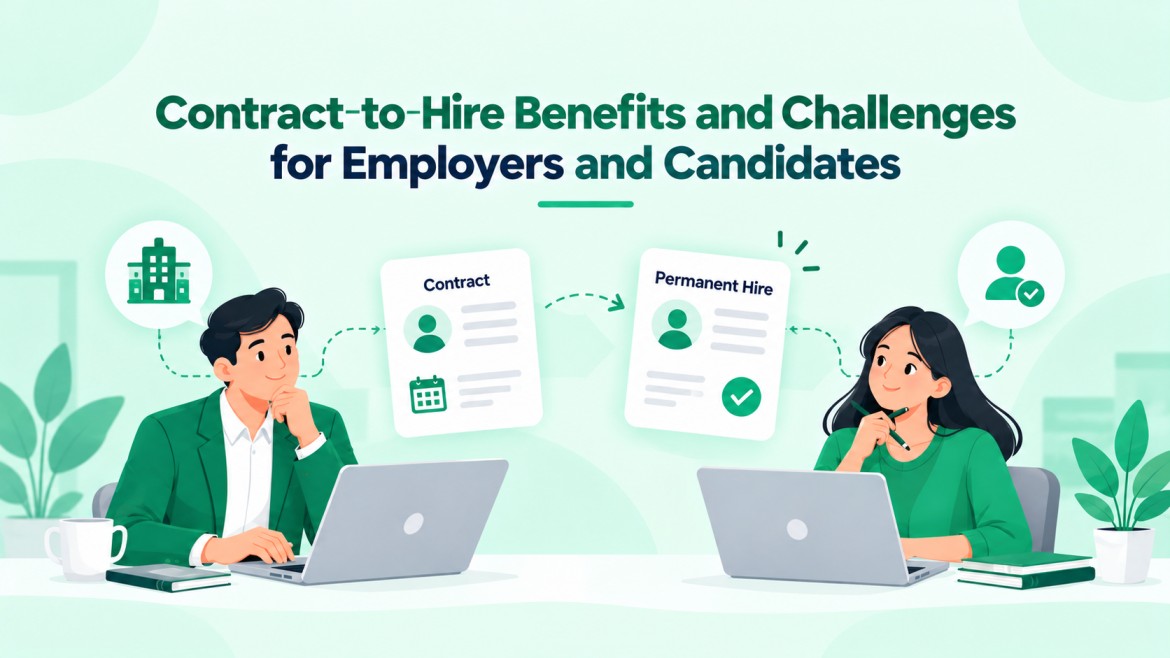
Contract-to-Hire: Benefits And Challenges You Need To Know
Contract-to-hire benefits come down to one advantage: you test a worker on real tasks before offering a permanent role. That lowers hiring risk and gives you room to adjust headcount.
The World Economic Forum’s Future of Jobs Report 2025 found that 81% of employers expect to rely on work experience when assessing skills through 2030. A contract-to-hire arrangement can help employers observe how candidates apply their skills in real working conditions.
The trade-offs are early exits, weaker team buy-in, worker status risk, and conversion fees. This guide covers both sides and shows how to run the model well.
What Is Contract-to-Hire?
Contract-to-hire is a hiring model where a worker starts on a fixed-term contract, with a possible permanent job when the term ends. The employer judges skills, reliability, and team fit on real work. Near the end of the term, both sides decide to convert, extend, or part ways.
Many employers run it through a staffing agency that handles payroll during the contract. Others engage the worker directly.
The route changes the cost, the conversion terms, and the legal status of the worker, so choose it before the search starts.
Contract-to-Hire Benefits for Employers
-
Lower hiring risk
An interview shows how a person talks about work. A contract term shows how they do it. You see delivery against deadlines, response to feedback, and habits with colleagues before any permanent commitment. If the fit is wrong, the contract ends on its stated date.
-
Flexible headcount
Budget approvals, launches, and reorganizations can leave a team short for months. A contract-to-hire seat fills the gap without locking in permanent headcount before the plan is settled.
-
A faster start
Agencies can hold pre-screened candidates, and your own records can help too. A searchable candidate database lets you pull earlier finalists into a contract role quickly instead of opening a fresh search.
-
More predictable early costs
A contract rate is fixed up front, so the first months are easy to forecast. Compare the full cost, including agency margin and any conversion fee, against a direct hire before you choose.
-
Decisions based on evidence
The conversion call rests on work you observed, not impressions from a few interview rounds. A structured interview process still matters at the start, because it keeps the contract shortlist fair and comparable.
Contract-to-Hire Benefits for Candidates
Contract-to-hire gives employers a chance to assess a candidate’s skills, work quality, and team fit before making a permanent hiring decision. It also helps businesses manage changing workloads and make better hiring decisions based on actual performance.
The main benefits include:
- A way in. A contract role can open a door that permanent applications do not.
- A real preview. The candidate sees the manager, the workload, and the culture before committing.
- Proof through work. Strong performers who interview poorly can show their skills on the job.
- Useful experience. Even without an offer, the role adds recent, relevant work to a resume.
Contract-to-Hire Challenges and How to Handle Them
Each risk below has a practical fix. Most come down to clear terms and steady communication.
1. Contractors leave early
Contractors may keep interviewing during the term, and a stronger offer can pull them away mid-project. Share the permanent role details in the first week, set the conversion decision date early, and keep a backup shortlist in your talent pool recruitment.
2. Low ownership on both sides
A worker unsure of the future may do the minimum, and permanent staff may hold back knowledge from someone who could leave. Give the contractor real deliverables, include them in normal team meetings, and tell the team how the evaluation works.
3. An unclear path to a permanent role
Candidates lose trust when the label promises more than the role offers. Use “contract-to-hire” only when a permanent seat exists or is likely to be approved, and put the conversion criteria in writing.
4. Conversion fees and contract terms
Some agency agreements charge a fee when you convert a worker. Read the clauses on early conversion, notice periods, and when the fee applies before you sign, and add them to your cost comparison.
The steps to mitigate risks in contract-to-hire cover contract wording and exit planning in more depth.
5. Pressure and benefit gaps for the worker
Constant evaluation creates stress, and contract workers may have fewer benefits than permanent staff. Give feedback at set points so the worker never has to guess where they stand, and be direct about benefits during the term.
Check Worker Status Before the Contract Starts
Worker status is the legal risk that gets the least attention. In an agency arrangement, the agency usually employs the worker during the contract term. If you engage the worker directly as an independent contractor, the facts of the working relationship count, so the label in the contract is only one input.
Rules differ by location, so have legal counsel review contract wording, working hours, and who directs the daily work. Staffing firms should also review the compliance pitfalls that affect US placements.
How to Run a Contract-to-Hire Engagement
- Write the conversion criteria first. List the outcomes that would justify a permanent offer, like deliverables, response to feedback, and teamwork.
- Set the term by the role. Choose a length that covers a full work cycle for the job, like a release or a reporting period.
- Agree conversion terms before day one. Settle the fee, the notice period, and the date when both sides confirm intent.
- Onboard like a permanent hire. A new hire onboarding checklist keeps access, introductions, and goals ready on day one.
- Hold structured check-ins. Short written feedback at agreed points keeps expectations visible to both sides.
- Decide before the term ends. Convert, extend, or release, and tell the worker early.
When Contract-to-Hire Fits, and When Direct Hire Is Better
Contract-to-hire fits when:
- The role is new or still taking shape.
- Workload spikes before permanent headcount is approved.
- Skills are hard to judge in interviews.
- A wrong hire would cost the team more than a longer process.
Direct hire is the better choice when:
- No permanent role exists or is likely to be approved.
- The job needs long-term ownership from day one.
- The candidates you want expect a permanent offer.
Teams weighing this against freelance work can compare C2H vs freelance models before deciding.
Tracking Contract-to-Hire Workers in an ATS
Contract-to-hire adds a second set of records: contract dates, check-in notes, feedback, and a conversion decision. Spread across email and spreadsheets, these details get lost. An applicant tracking system keeps one profile per worker.
Hirium’s candidate profile management holds notes and history in one place, and recruitment status update software keeps candidates informed during the term.
Staffing firms running contract-to-hire for several clients can see how an ATS for recruitment agencies fits that workflow.
Final Thoughts
Contract-to-hire works when the terms are clear, worker status is checked, and the conversion decision has a date. Used that way, it gives employers proof of fit and gives candidates a fair shot at a permanent role.
To track these hires from first interview to conversion decision, book a Hirium demo.
FAQs
1. What are the main benefits of contract-to-hire?
Lower hiring risk, flexible headcount, and a decision based on real work. Candidates get a job preview and a way to prove skills. The model works best when conversion criteria are agreed before the contract starts.
2. How long should a contract-to-hire term last?
Long enough to see the worker handle a full cycle of the job. Set the length in the agreement, along with the date when both sides confirm whether to convert, extend, or end the contract.
3. Can you convert a contractor before the contract ends?
Often yes, if the agreement allows it. Check for conversion fees, notice periods, and minimum terms in the staffing agency contract before you make an early offer.
4. Do contract-to-hire workers receive benefits?
It depends on who employs them during the term. In an agency arrangement, the agency sets the benefits. Direct contracts follow the written terms. Confirm the details before the start date.
5. What if the contractor turns down the permanent offer?
Share compensation and role details early so the offer holds no surprises. Check in during the term to gauge interest, and keep a backup shortlist ready.
6. How is contract-to-hire different from temp-to-hire and direct hire?
The terms overlap, and agencies use them differently, so read the agreement. Contract-to-hire starts with a defined term and a planned decision on a permanent role. Direct hire skips the trial and starts permanently.