AI Candidate Insights vs Reference Checks: Better Predictor?
For the past years, reference checks have been one of the last steps before hiring a candidate.
Recruiters and hiring managers would speak with former managers or colleagues to understand a candidate’s work ethic, communication style, and overall performance. When companies hired only a few people at a time, this process provided valuable context.
Hiring looks very different today. Many businesses receive hundreds of applications for a single role, making it difficult to spend hours speaking with every reference. As hiring volumes have increased, recruiters have started relying on AI candidate insights to evaluate applicants more quickly and consistently.
A 2026 Greenhouse report found that 91% of U.S. hiring managers have encountered or suspected AI-generated interview answers during online meetings.
For startups and SMBs hiring at volume, often with 200 – 400 applications per open role and a recruiter-to-requisition ratio that leaves little room for deep diligence,e the question isn’t philosophical. It’s operational: where do you spend your limited verification hours, and which signal do you trust when the two disagree?
This piece breaks down what each method actually predicts, where each one quietly fails, and a decision framework for combining them without adding weeks to your hiring timeline.
What Are AI Candidate Insights vs Reference Checks?
AI Candidate Insights vs Reference Checks compares two hiring verification methods:
AI-driven candidate database evaluation, which parses resumes, scores skills, and analyzes structured interview responses against traditional reference checks, where past managers or colleagues are contacted to vouch for a candidate’s performance and character.
One is data-derived and scalable; the other is relationship-derived and manual.
Both exist to answer the same underlying question: Will this person perform the way their resume claims they will, but they draw on fundamentally different evidence.
The Core Problem: Neither Method Alone Predicts Performance Reliably
Most hiring teams treat reference checks as a formality and AI screening as a shortcut. Both assumptions cause bad hires.
Reference checks fail quietly.
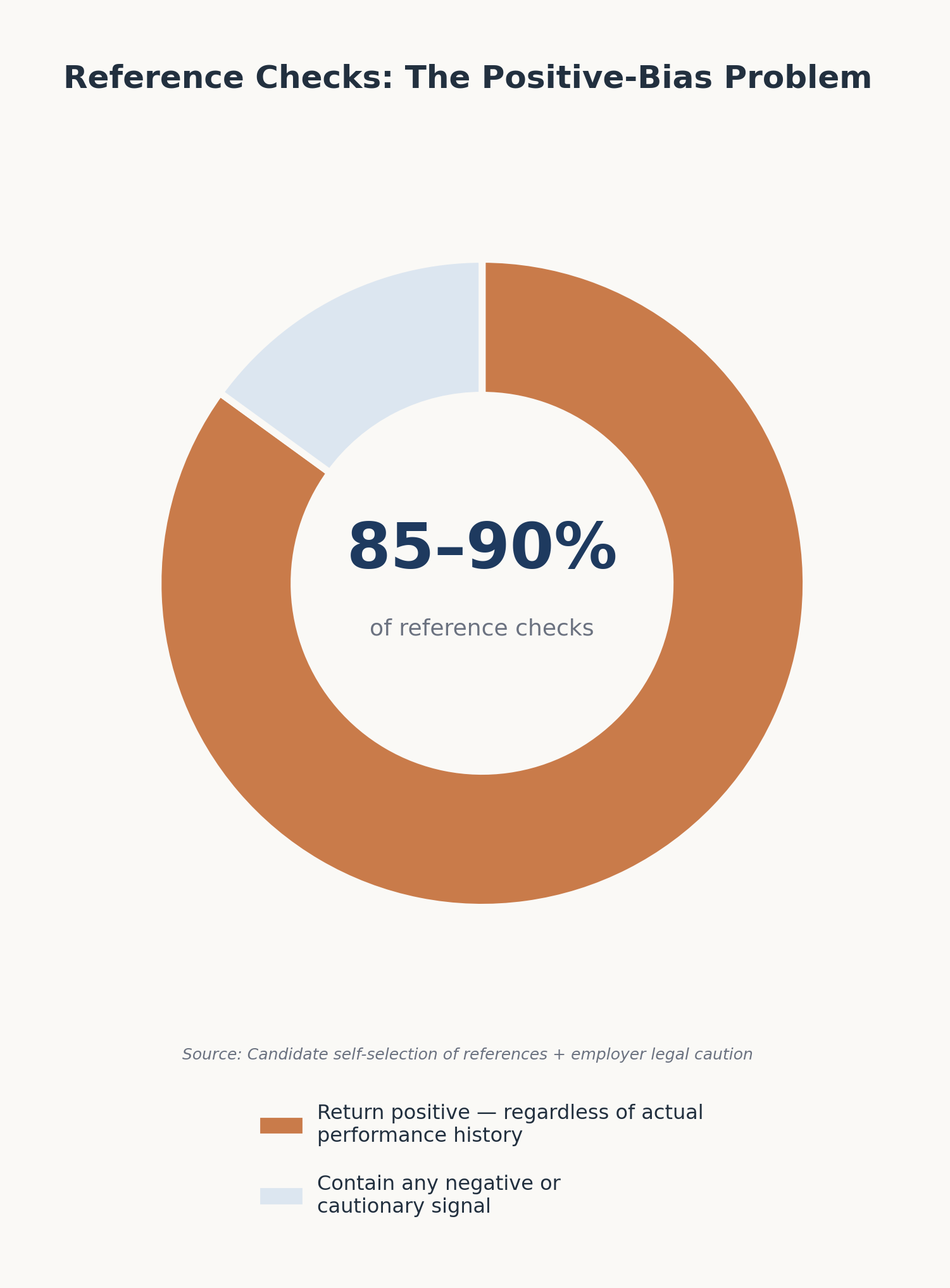
Roughly 80–90% of reference calls come back positive, regardless of the candidate’s actual performance history, because candidates choose their own references and former employers avoid legal exposure by giving neutral or vague feedback.
A reference check that returns almost no negative signal isn’t validating the candidate; it’s validating that the process has a structural blind spot.
AI resume screening has the opposite failure mode. It’s excellent at pattern-matching skills, experience duration, and keyword alignment, but it has no visibility into interpersonal reliability, team fit, or how a candidate behaves under pressure the exact things reference checks were designed to surface.
Teams that lean entirely on AI resume parser output and skip human verification end up over-indexing on credentials that don’t correlate with retention.
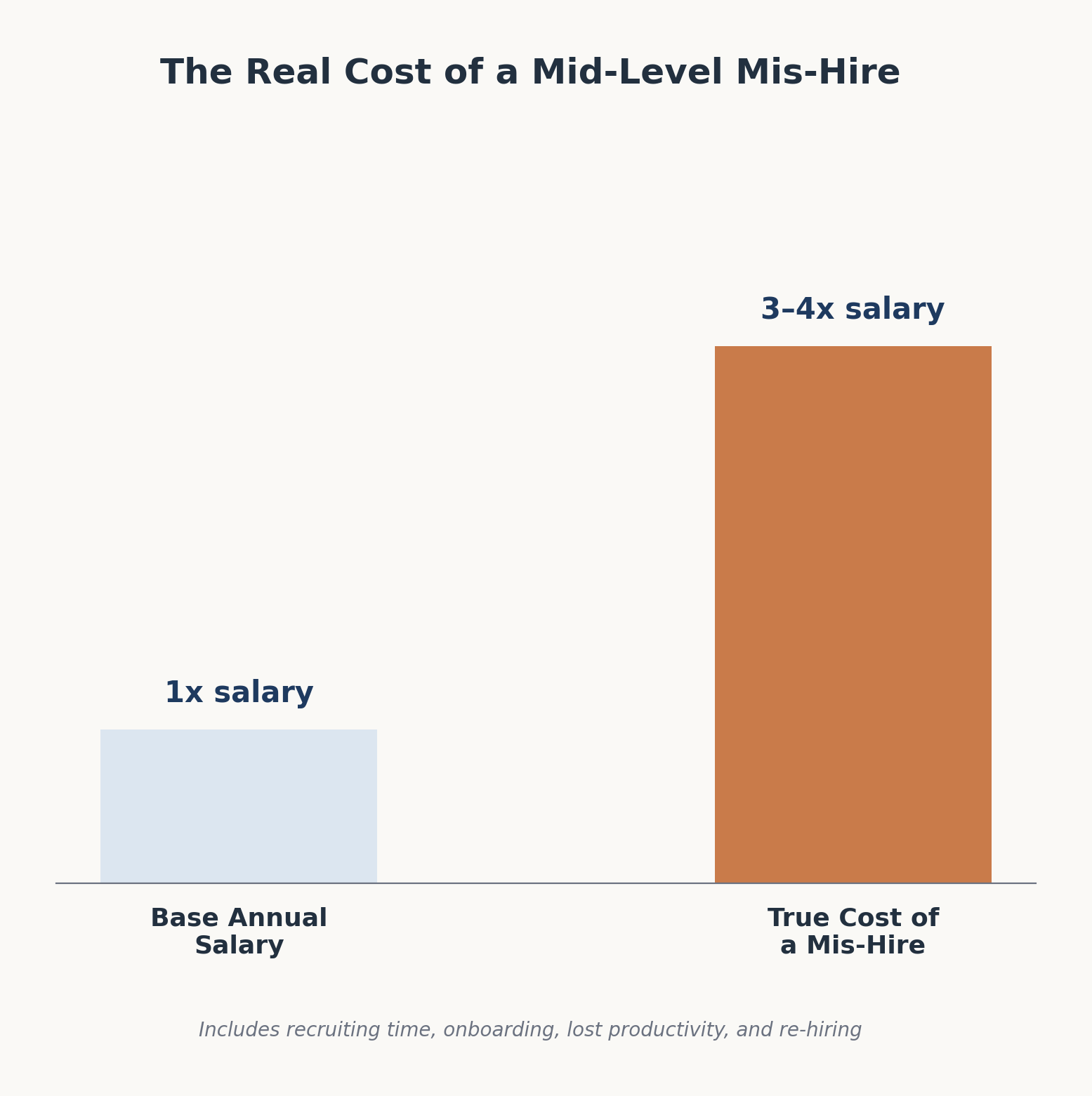
The real cost shows up downstream. A mis-hire at the mid-level individual contributor tier typically costs a startup 3-4x the role’s annual salary once you count recruiting time, onboarding, lost productivity, and re-hiring. Most teams underestimate this by treating a bad hire as a resume problem rather than a verification-process problem.
 FM
FM
Where Each Method Actually Delivers and Where It Breaks Down
What AI Candidate Insights Are Good At
AI-driven evaluation is strongest at the volume stage of hiring, where human reviewers physically cannot give every application equal attention.
- Consistency at scale. An AI resume parser applies the same criteria to candidate 1 and candidate 400. A tired recruiter on their sixth hour of screening does not.
- Skills verification through structured tasks. Work samples, coding tests, and scenario-based questions scored algorithmically remove a layer of self-reported inflation.
- Bias reduction in first-pass screening. Structured AI screening, when built without proxy variables for protected characteristics, reduces the halo effect that comes from a recruiter recognizing a familiar university name or employer brand.
- Speed. Teams using candidate profile management systems that centralize parsed resume data, skill scores, and interview notes cut time-to-shortlist from days to hours.
Where AI Insight Breaks Down
- No visibility into team dynamics. AI can score a candidate’s stated project ownership. It cannot tell you whether they took credit for a team’s work.
- Self-reported data is still the input. Garbage in, garbage out: an AI resume parser is only as reliable as the resume it’s parsing, and resumes are marketing documents.
- Cannot verify claims independently. AI insight tells you what the candidate says happened. It doesn’t confirm it happened.
What Reference Checks Are Good At
- Independent verification. A former manager confirming a candidate actually led the project they claim to have led is evidence an algorithm cannot generate.
- Behavioral and interpersonal signal. How someone handled conflict, missed a deadline, or managed a direct report rarely shows up cleanly in structured data.
- Retention-relevant context. Why someone left a role voluntarily, performance-related, or a layoff is context that changes how you interpret every other data point.
Where Reference Checks Break Down
- Selection bias. Candidates list references who will speak favorably. The check verifies the candidate’s judgment in choosing references, not necessarily their job performance.
- Legal caution flattens honesty. Many companies now instruct former managers to confirm only dates and titles, stripping the check of predictive value entirely.
- Time cost. Reaching two to three references can add 3–5 business days to a hiring timeline a real cost when a strong candidate has competing offers.
A Practical Verification Process
For teams building a repeatable process, this sequencing tends to work best:
- Run AI resume screening first to filter volume and produce a ranked shortlist based on skills match and experience relevance.
- Score structured interview responses using consistent rubrics, not just gut impressions.
- Flag discrepancies between resume claims and interview or work-sample performance; this is where AI candidate insights earn their value.
- Reserve reference checks for finalists only typically the top 2–3 candidates per role, not every applicant.
- Ask reference questions that require specifics, not yes/no confirmation (“Describe a time this person missed a deadline” instead of “Would you rehire them?”).
- Cross-reference the two data sets before making an offer, and document where they agree or conflict.
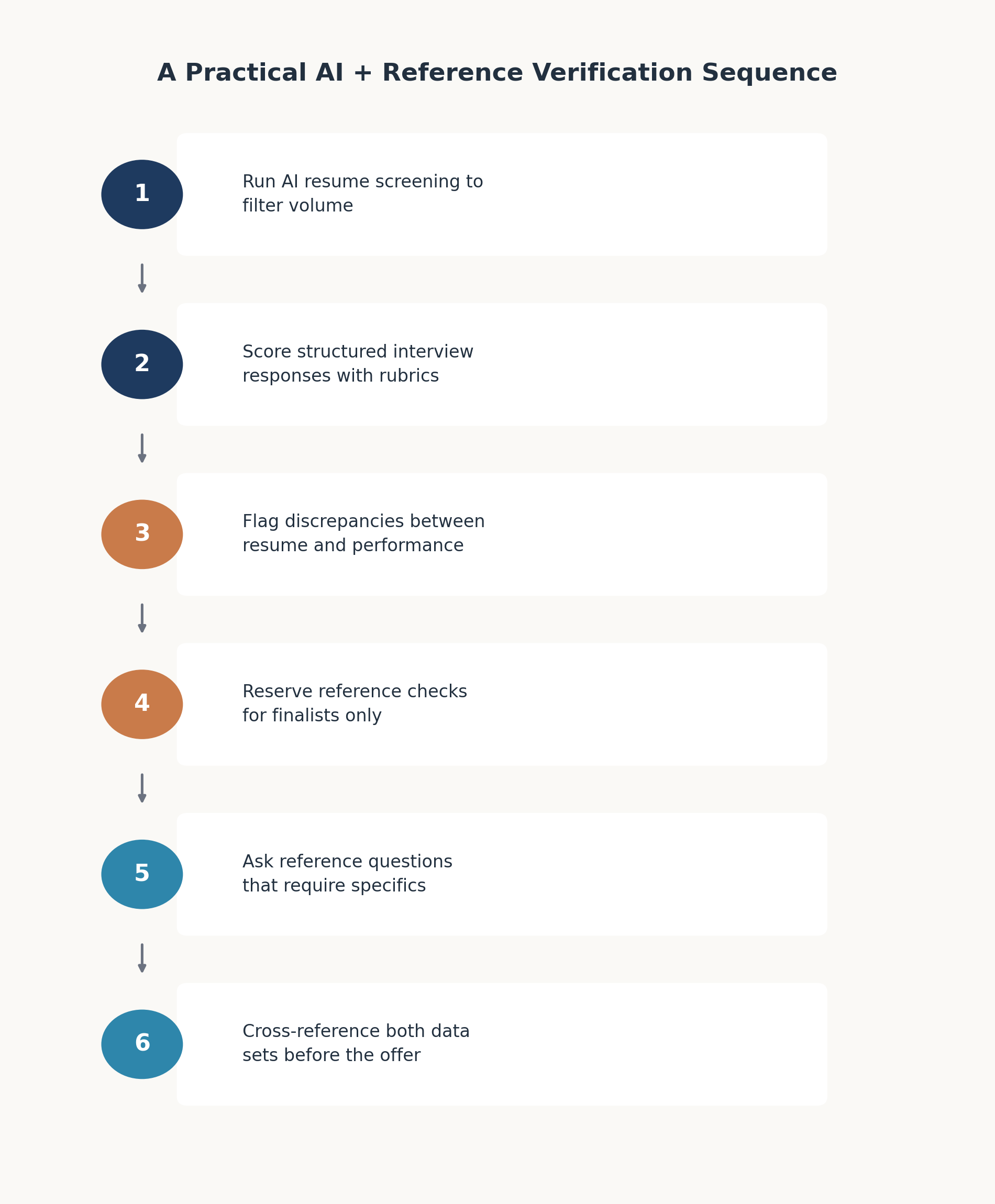
This sequencing keeps AI doing what it’s fast at filtering and scoring volume while reserving human verification for the decisions with the highest stakes, where the extra days are worth spending.
Real-World Application: Two Hiring Scenarios
Case :1: Series A SaaS startup, engineering hire.
A 40-person startup was filling three backend engineering roles simultaneously with 600+ combined applications. Manual screening alone would have taken an estimated three weeks per role.
After layering AI candidate insights for first-pass skills scoring and reserving reference checks for only the final two candidates per role, the team cut time-to-shortlist by roughly 65% and still caught one candidate whose reference revealed an undisclosed performance improvement plan at their prior job, ob something the resume and interview had not surfaced.
Case 2: 25-person D2C brand, ops manager hire.
A hiring manager relied entirely on reference checks for a critical operations role and skipped structured skills verification to save time.
The references were strong, but the hire struggled with the specific inventory-forecasting tool the role required.
A gap that a 20-minute structured work-sample test, the kind AI-assisted screening tools generate automatically, would have caught before the offer went out.
Neither scenario proves one method superior. Both prove the same thing: the failure mode was relying on a single signal.
Decision Framework: When to Weight AI Insight vs Reference Checks
| Hiring Scenario | Weight AI Insight More | Weight Reference Checks More |
| High-volume, entry-to-mid roles | Faster, consistent filtering | Lower priority reserve for finalists |
| Leadership or people-management roles | Useful for skills baseline | Behavioral history matters most |
| Technical/skills-heavy roles | Work-sample scoring is objective | Useful for verifying claimed ownership |
| Roles with high team-dependency | Limited signal on interpersonal fit | Reveals collaboration patterns |
| Fast-moving startup timelines | Speed matters more than depth | Reserve for top 1–2 finalists only |
The pattern across every row: AI insight scales the funnel, reference checks validate the narrowest, highest-stakes part of it.
What Most Teams Get Wrong
The most common mistake isn’t choosing the wrong method; it’s treating the two as competitors instead of sequential filters. Teams that debate “AI screening vs reference checks” as an either/or decision are solving the wrong problem.
The second mistake is asking reference checks to do work they were never designed for: catching skills gaps. A reference call is a character and reliability check, not a competency test. Teams that skip structured skills verification and expect references to catch technical mismatches are consistently disappointed.
The third, quieter mistake: not tracking outcomes against the verification method used. Most recruiting teams never go back and correlate which hires sourced through which screening path actually succeeded at the 6-month and 12-month mark.
Without that feedback loop, teams keep repeating whichever process feels comfortable rather than the one that’s actually predictive.
A centralized candidate profile management system that retains screening scores, interview data, and reference notes alongside eventual performance reviews is the only way to close that loop.
Frequently Asked Questions
1. Are AI candidate insights more accurate than reference checks?
Neither is uniformly more accurate; they measure different things. AI insight is more accurate for skills and experience verification because it relies on structured, comparable data. Reference checks are more accurate for behavioral and interpersonal signals when the reference is willing to speak candidly.
2. Do reference checks still matter in 2026?
Yes, particularly for leadership roles and positions with high team-dependency. Their predictive value has narrowed as companies restrict what former employers can legally disclose, but they still catch context like reasons for departure that AI screening cannot access.
4. What are the biggest blind spots of traditional reference checks?
Selection bias (candidates choose favorable references) and legal risk-aversion (many companies now confirm only employment dates) are the two largest blind spots. Both reduce reference checks to a formality rather than a genuine predictive signal.
5. How do startups verify candidates without slowing down hiring?
Front-load AI resume screening and structured skills assessments to filter volume quickly, then reserve time-intensive reference checks for only the top 2–3 finalists per role. This sequencing, supported by recruitment status update software that keeps candidates informed automatically, prevents strong candidates from dropping out due to slow, opaque timelines.
6. Is AI resume screening legally compliant?
Compliance depends on how the system is built. AI screening tools that avoid proxy variables for protected characteristics and maintain auditable scoring logic are generally defensible, but hiring teams should confirm any tool’s compliance documentation rather than assuming it by default.
7. Which method is better for high-volume hiring?
AI candidate insights are better suited to high-volume hiring because they apply consistent criteria across hundreds of applications in the time a manual review would cover a fraction of that pool. Reference checks remain valuable but should be reserved for the shortlist stage.
Where This Leaves Hiring Teams
Treating AI candidate insights vs reference checks as a single winner-take-all comparison misses the actual lesson: each method catches what the other misses, and the highest-performing hiring processes use both, in sequence, weighted by role.
Teams evaluating how to structure this without adding headcount to their recruiting function often start by centralizing screening data resume parsing, skills scores, interview notes, and reference outcomes in one place rather than across scattered spreadsheets and email threads.
Hirium’s AI-powered screening and candidate profile management tools are built for exactly that sequencing, with a forever-free plan for teams that want to test the framework before committing to a paid tool. If you’re rebuilding your verification process this quarter, that’s a reasonable place to start.